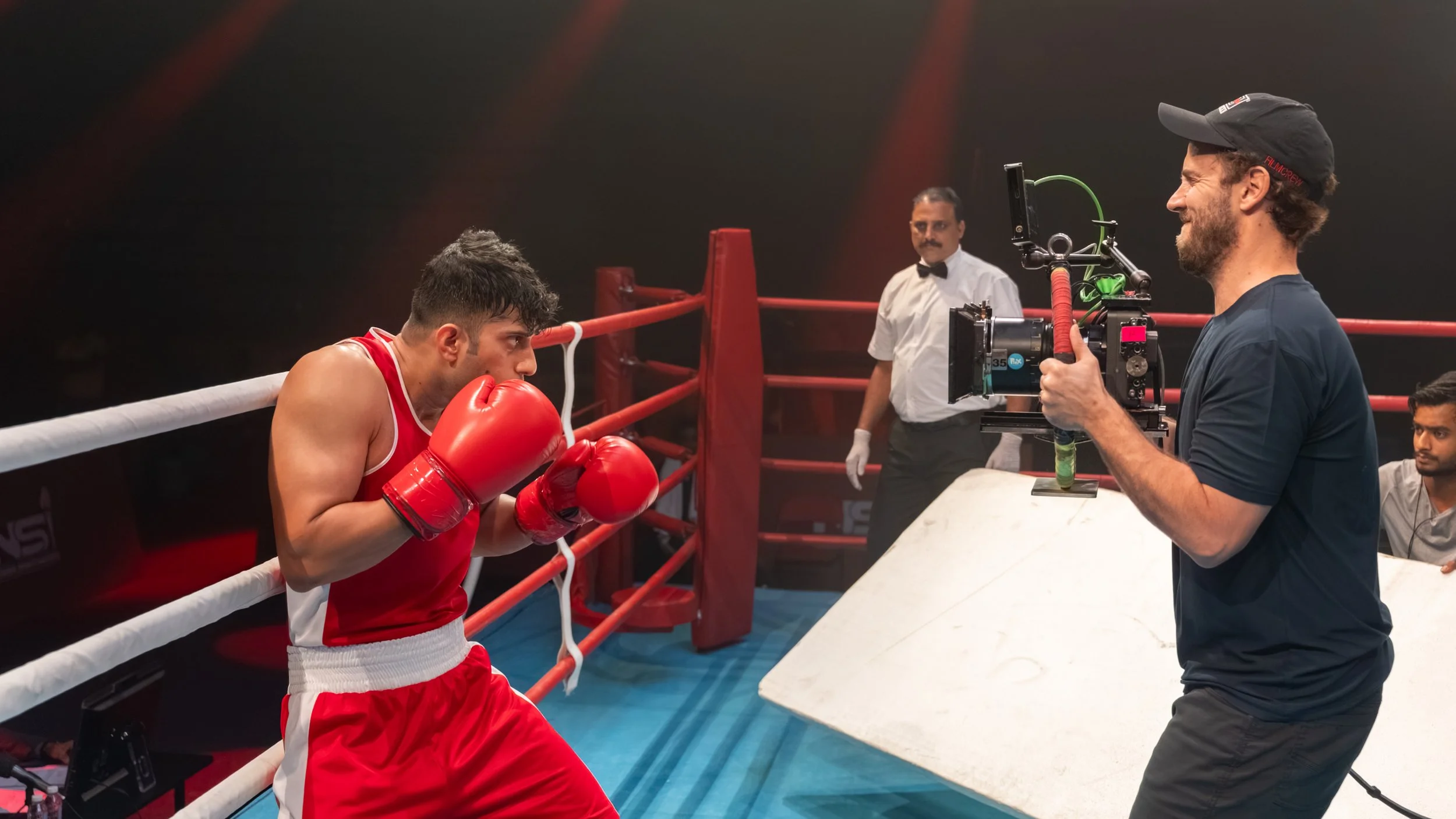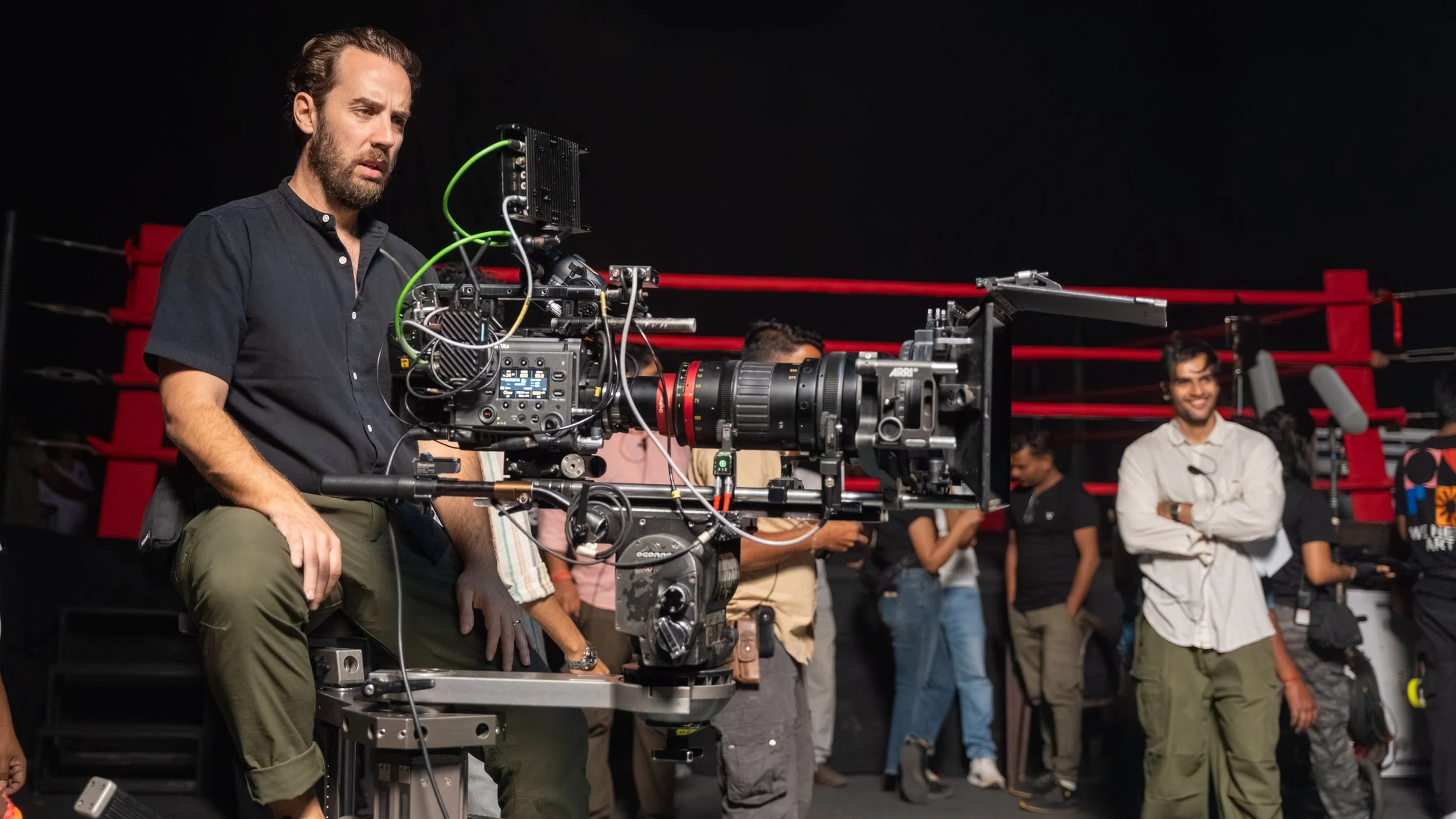
Glory is a mystery thriller set in the world of Olympic-hopeful boxing in Punjab. I shot it through 2025 — six weeks scouting across India, then back and forth between Mumbai stages and practical locations through an 85-day shoot. It was the most complex prep I had done.
Finding the visual language
The first weeks were about finding a visual language. It needed the compositional weight of a classic western, the spatial patience of Kurosawa, and the texture of contemporary Indian noir. Those three things don't sit naturally together, so that friction was the first problem to solve.
I compiled references, art renders, costume tests, diagrams, raw notes, and shot lists in the Concepts app so I could see everything from afar or zoom in to specific notes to present. I'd often export these as image briefs so a director or crew member could understand exactly what I was going for in a particular scene. I also worked in Resolve to create a proper show LUT so we had our look figured out before we started shooting.
The reference document was not a mood board. Mood boards imply decoration. This was a functional map — a spatial canvas organizing hundreds of film stills by lighting condition: Day Exterior, Day Interior, Night Nature, Night Streets, and Night Interior.
Managing the scale
To manage over 400 scenes across multiple cities, I used several tools in tandem. I built and maintained a large spreadsheet of all the scenes to view the schedule, manage logistics, and combine equipment in a way that was production-friendly. It lets you prioritize upcoming shoots and gives you an easy look at where cuts are necessary and where to push. The more data you can provide producers, the better your chance of getting what you need — if not necessarily what you want.
The DP has to manage logistics in a similar way as the AD, but it's much broader. You're constantly balancing the schedule and timing with the money from quotes. It's a fluid negotiation, trying to make the best show possible within the confines of your resources. One minute you're having theoretical, thematic conversations with directors, and the next you're having practical arguments about costs with your gaffer and production.
We spent six weeks scouting in Punjab. On location, you're figuring out where the sun goes at 4 PM, which wall you can take out, how to light a night exterior on a street with no power. Back on the Mumbai stages, where the sets were being built, we were making decisions about a world that didn't exist yet — based on architectural drawings and scale models. Both matter.
The prep documents
I built location-specific breakdowns for every significant set: the Hospital, Fort, Lake, Gas Station, and Forest. The Hospital was the densest. It had color palette swatches, schedule context, overhead layouts, lighting plans, and scene-by-scene shot diagrams right alongside the shot list. At 6 AM, standing on that floor trying to remember what you decided in a prep meeting six weeks ago, you open one document and it's all there. For the Gas Station sequence, we used hand-drawn fight storyboards. Some things you just have to draw to show what you mean.
What broke down
Prep breaks down when coordination fails. Your master scene list might run to hundreds of scenes, which a spreadsheet handles fine. But when a scene moves in the schedule — which happens constantly — you update the sheet, and then manually check every affected location document.
The prep and the production reality start to drift. On a short shoot, that's manageable. On a series, it compounds. By week four of shooting, documents were living in four places. The gaffer had v1, the director had v3, and I wasn't sure which version of the blocking we had actually agreed on. I was doing that translation in my head, every day, for months.
What I built after
When Glory wrapped, I built Headroom — a pre-production platform for cinematographers. The tool I was wishing for during those three months.
Glory was prepped before Headroom existed. I used Concepts, Google Sheets, and PDFs. I wrote a full breakdown of the DP prep workflow — and what that process looks like inside Headroom — here: headroom.pro/guides/dp-prep-netflix-series